
Humidity, Heat and Altitude: How Climate Affects a Solid Wood Table
A solid wood table is never finished growing and shrinking. The question is how much, and whether it was built to do so.
Solid wood is a material that responds to the air around it. It takes up moisture when the air is humid and gives it back when the air is dry, and as it does so it swells and shrinks, mostly across its width. A table that sits quietly in a coastal apartment in Miami will meet a very different atmosphere in a mountain house in Aspen, a desert home in Arizona, or a heated townhouse in New York. None of these climates is a problem for a well-made table. All of them are worth understanding before the table is ordered, because the climate of the room, more than the age or the price of the wood, decides how it will behave.
How Wood Responds to the Air
Wood settles toward a moisture content that matches the humidity of the room. When the air is humid, the wood takes up water and expands. When it is dry, the wood loses water and contracts. This movement is not uniform. Along the length of a board it is negligible, but across the width of the grain it is significant: a top 40 inches (100 cm) wide can change by several millimeters between a humid summer and a dry winter. That is normal, and it is the reason the construction of the top and its fixing to the base matter so much, as covered in the guide to table joinery.
The comfortable range for wood and for people is the same: an indoor relative humidity of roughly 35 to 55 percent. Inside that range a solid wood table moves gently and unnoticed. Outside it, the movement grows, and the effects begin to show.
Humid Climates: Miami, the Gulf Coast, the Southeast
In a humid coastal climate, the danger is not usually the outdoor air but what happens when the air conditioning is off. A home kept cool and dry is a good environment for wood. A home left closed in summer, as a second home often is, rises to high humidity: the top swells, the finish can cloud, and in the worst cases mold appears on the underside or on the base. The remedy is not exotic. Keep the house on a steady, moderate setting, use a dehumidifier when the property is empty, and avoid placing the table against a wall that sweats. A table in a humid home is also better off with a hard-wearing, breathable finish than a heavy sealed one, a point returned to below.
Dry Climates: Aspen, Denver, Santa Fe, Phoenix
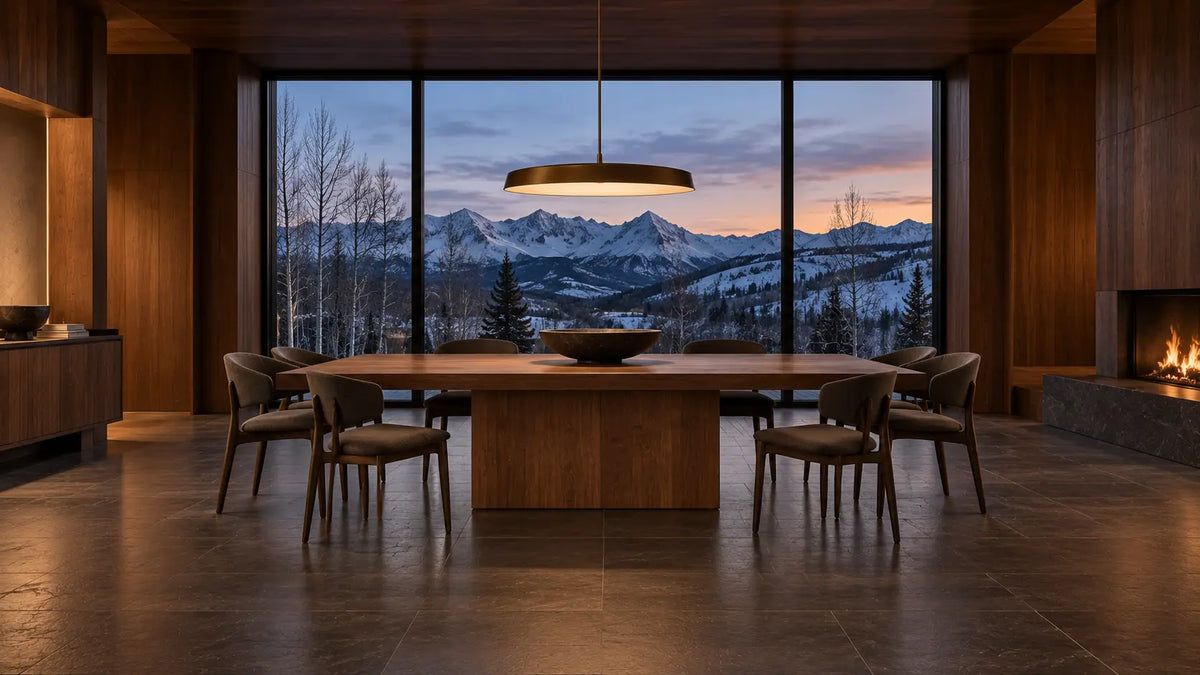
A dry climate asks more of a solid wood table. At altitude, and in the desert, the outdoor air holds very little moisture, and a heated or air-conditioned house can fall to 15 or 20 percent humidity. The wood loses water quickly, contracts, and can develop small splits at the surface, called checks, open seams at the joints between boards, or a slight cup across the top. These effects are cosmetic in many cases, but they are avoidable in most. Altitude itself is not the cause: it is the combination of low humidity, cold air that is dried further when heated, and strong sunlight, which also lightens or darkens the wood over time, as discussed in the piece on daylight and the dining table. A humidifier set to 40 percent in winter is the single most effective protection, and it is better for the people in the house as well.
Four-Season Climates: New York, Boston, Chicago
The hardest climate for wood is often the one with the widest swing. A Northeastern home is humid in summer and very dry in winter once the heating comes on, which means the table moves through its full range every year. A well-constructed top accommodates this without harm, and the piece on the winter dining room explains what changes in the room each season. The practical advice is to avoid abrupt changes and to keep the table away from radiators, forced-air vents, and a fireplace, where local heat dries one part of the top faster than the rest.
| Climate | Main Risk for the Table | What Helps |
|---|---|---|
| Humid coast (Miami, Gulf) | Swelling, clouded finish, mold in a closed house | Steady cooling, dehumidifier, breathable finish |
| Dry mountain (Aspen, Denver) | Shrinkage, checks, open seams in winter | Humidifier near 40 percent, away from vents |
| Desert (Phoenix, Santa Fe) | Dryness all year, strong sun | Humidity control, UV-resistant finish, shade |
| Four seasons (New York, Chicago) | Wide yearly swing, dry heated winters | Floating top fixing, no heat sources nearby |
| Mild and damp (Pacific Northwest) | Slow moisture uptake, finish wear | Good ventilation, periodic refresh of the oil |
What the Maker Can Do: Species, Cut, and Construction
Climate is not only the owner's concern. The maker has real choices, and they are best made once the location of the table is known. The species matters: walnut is the most dimensionally stable of the three most common choices, which is one reason it is favored for wide tops, as set out in the guide to walnut, oak, and ash, while plain-sawn oak and ash tend to move somewhat more. The way the boards are cut matters too: quarter-sawn boards move less across their width than plain-sawn ones, and a top built from several narrower boards spreads the movement across many joints instead of concentrating it in one. Finally, the fixing is decisive. A top screwed down rigidly to a rigid base will crack in a dry climate, while a top held by sliding clips or elongated slots can move freely, as explained in the piece on joinery.
The Finish: Breathe or Seal
The finish also interacts with the climate. An oil or hardwax oil lets the wood exchange moisture with the room, tolerates its movement, and can be refreshed locally, as covered in the guide to finishes. A film finish such as lacquer seals the surface more completely and resists spills, but it is less forgiving of movement and can show fine cracks along the grain in a very dry house. Neither is wrong, and the choice depends on the climate and on how the table will be lived with.
And Stone?
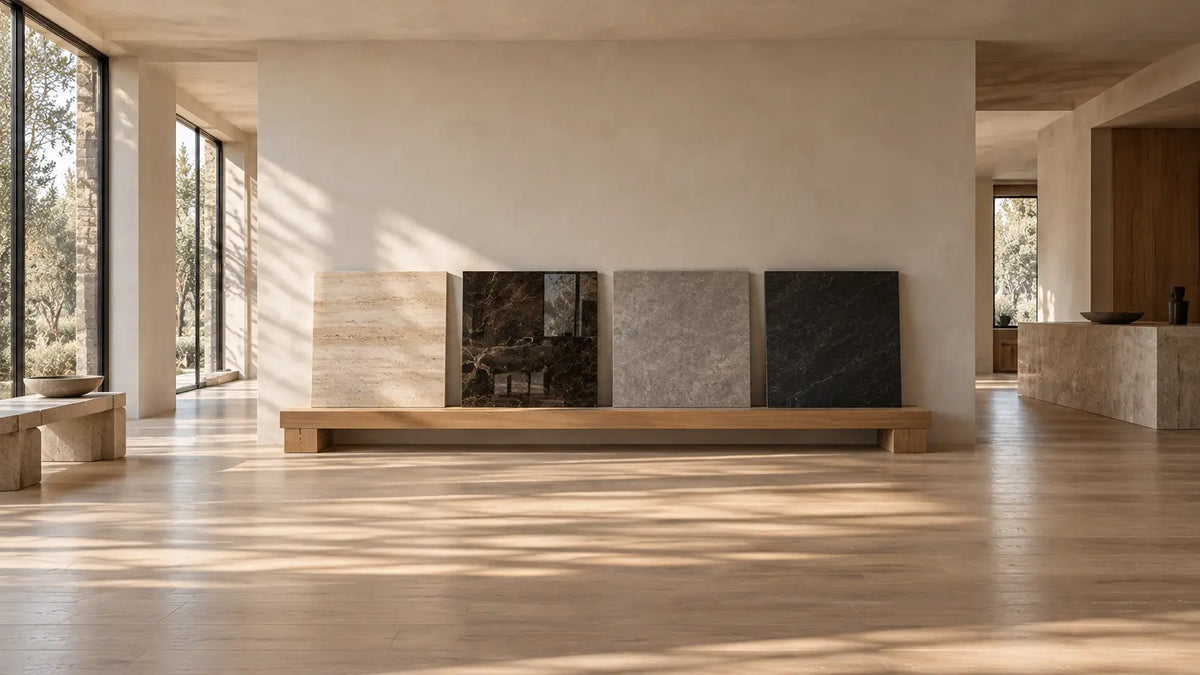
Stone does not move with humidity in any way a dining table would show, which makes a stone top a calm choice in climates that are hard on wood. It has its own conditions, such as sealing and the weight of delivery, covered in the guides to stone care and to how a stone table arrives. A table with a stone top on a wooden base still needs the base to be built for the climate.
Arriving in a New Climate
A table made in one climate and delivered to another meets a change in humidity on arrival. Wood adjusts to its new surroundings over days rather than hours, and it does so best if the room is at its normal temperature and humidity and if the table is not placed against a vent or in direct sun on the first day. Waiting a few days before regular use, with the house in its normal state, is a modest precaution that spares the table an abrupt adjustment.
- Aim for an indoor humidity between 35 and 55 percent, and near 40 percent in a dry winter
- In a humid climate, keep the house on a steady setting and use a dehumidifier when it is empty
- In a dry or high-altitude climate, use a humidifier and keep the table away from vents, radiators, and fireplaces
- Ask for a floating top fixing, and for quarter-sawn or narrower boards where the climate is demanding
- Choose the species with the location in mind, favoring walnut or well-cut oak for wide tops
- Prefer an oil or hardwax finish where breathability and easy refreshing matter
- Let the table settle in the room for a few days before regular use
- Tell the maker where the table will live, and for how much of the year the house is occupied
A table built for the climate it will live in does not fight the air around it. It moves with it, and it stays whole.
Our studio builds dining tables and chairs to order, in solid wood and in stone, with construction and species chosen for the home they are going to. If you're commissioning a table for a particular climate, our studio team is available to discuss the options directly.


Leave a comment
This site is protected by hCaptcha and the hCaptcha Privacy Policy and Terms of Service apply.