
The Dining Room for Two: When Scale Works Against You
A table sized for guests who visit twice a year, occupied daily by two people, isn't generous. It's a room working against the household that actually lives in it.
Households of two — couples, empty nesters, single professionals who entertain occasionally — routinely specify dining tables sized for a much larger household, reasoning that bigger reads as more luxurious, or protects resale value, or accommodates the handful of dinner parties held each year. This instinct deserves a closer look, because oversizing has real daily costs that rarely get weighed against those occasional benefits.
Why Buyers Oversize Anyway
Three reasons drive this pattern consistently. Resale anxiety — the belief that a smaller table will read as a compromise to a future buyer, even though a well-proportioned room generally shows better than an oversized one crammed into the same footprint. Occasional entertaining anxiety — sizing the everyday table around the two or three times a year it hosts eight people, rather than the other three hundred and sixty days it hosts two. And an association between size and luxury — the assumption that a larger table signals more, when in a genuinely luxury context, correct proportion signals more discernment than raw scale.
What Oversizing Actually Costs
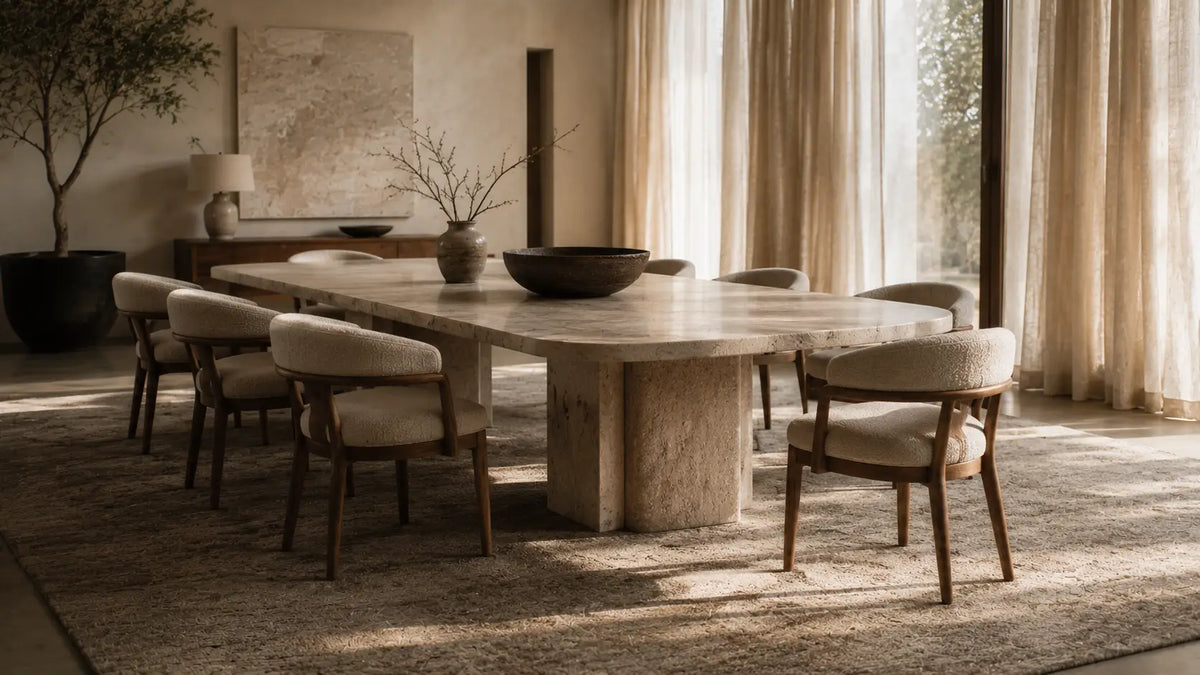
An oversized table imposes real, daily costs on a household of two. Intimacy is the first casualty — two people at the near end of an eight-seat table are physically distant from each other, which undercuts exactly the closeness a shared meal is meant to create. Room proportion suffers next — a table sized for eight in a room built for two overwhelms the space, shrinking usable floor area and circulation in a way that reads as cramped rather than generous, regardless of the table's own scale. And the psychological effect is real: two people at the corner of a large table can feel sparse and a little forlorn, not luxurious — the opposite of the effect the oversizing was meant to achieve.

Right-Sizing for Two, Correctly
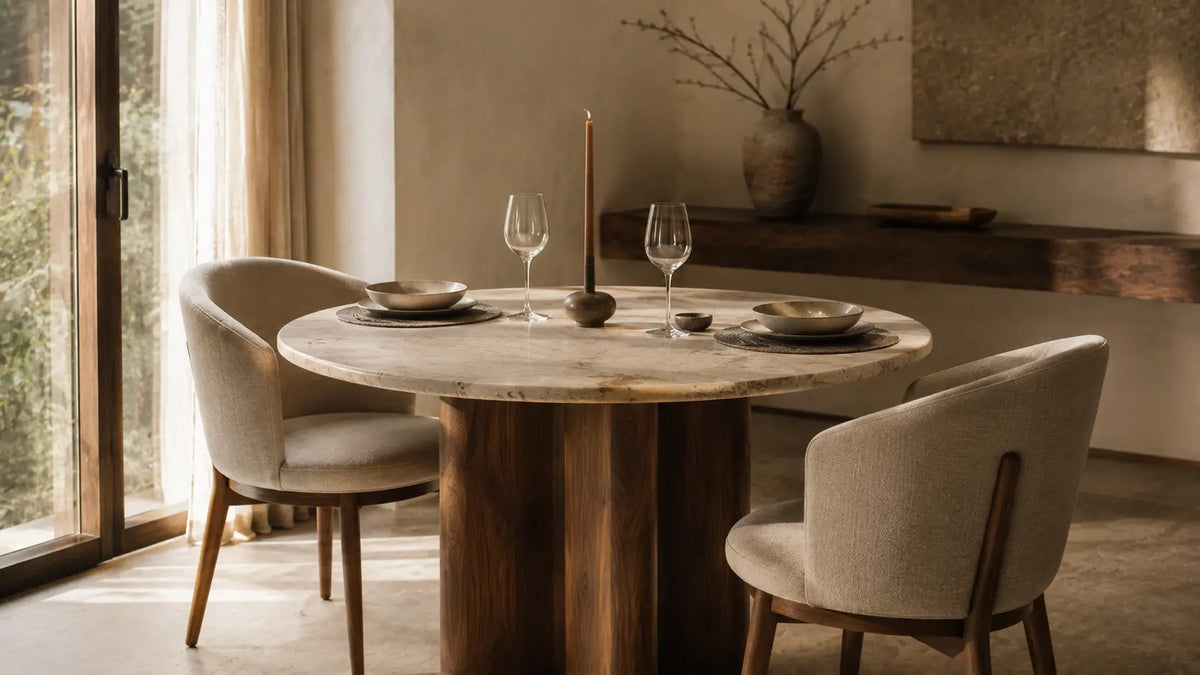
The honest baseline for a household of two is a table genuinely proportioned for two to four — not a compromise, but the correct specification for how the room is actually used most of the time. At this scale, conversation distance across the table is close and easy, proportion in the room reads as considered rather than sparse, and the table performs beautifully for its actual daily function rather than being built around a handful of exceptional occasions. This is not a smaller version of the "real" table — it is the correctly specified table for the household's genuine use pattern.
The Extension Table Solution
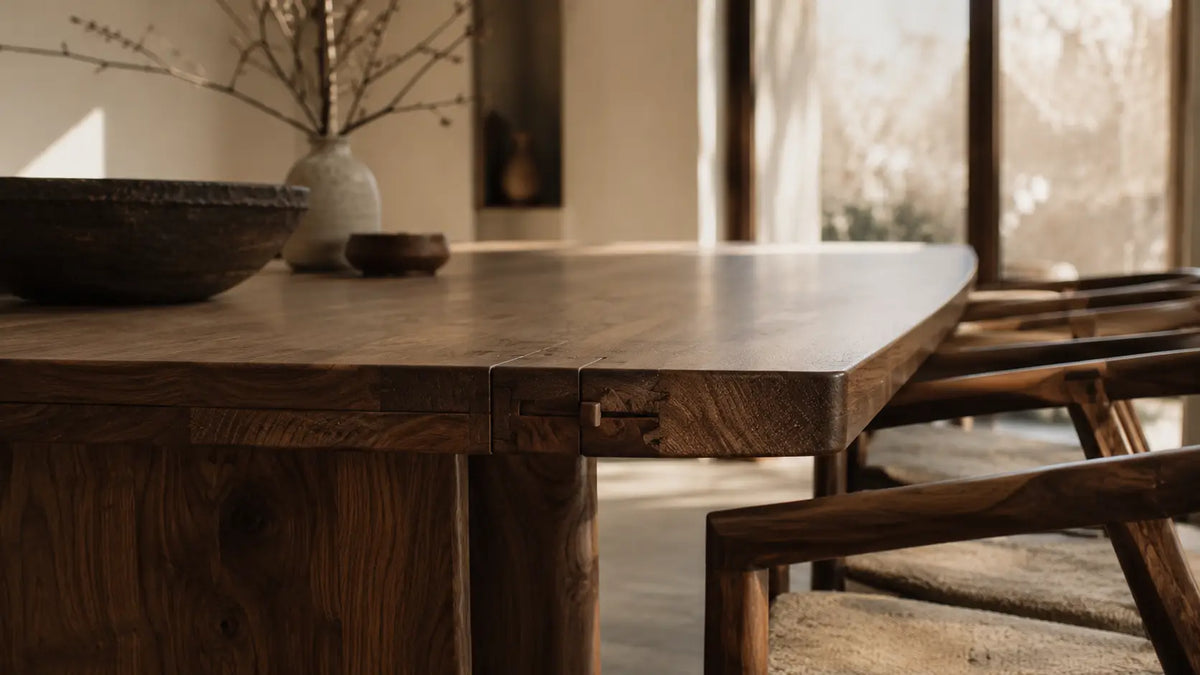
The legitimate answer to "but what about the holidays, or the dinner party" isn't a permanently oversized table — it's a table built with a genuine extension mechanism, sized correctly for daily use and expandable for the occasions that actually warrant more seats. This gives the household the daily experience a right-sized table provides while still accommodating the handful of larger gatherings a year without living with an oversized room the other 350 days. A well-built extension mechanism, specified from the start, solves the actual problem oversizing was trying to solve — without the daily cost.
Daily Use vs. Occasional Need
| Approach | Daily Experience | Occasional Gatherings |
|---|---|---|
| Permanently oversized table | Poor — distant, room feels cramped | Good — already fits everyone |
| Fixed table for two to four | Excellent — intimate, well-proportioned | Poor — no capacity for larger groups |
| Extension table, sized for two to four base | Excellent — right-sized daily | Good — expands when genuinely needed |
- Size the table for genuine daily use, not the handful of exceptional gatherings each year
- Resist the instinct that larger automatically reads as more luxurious
- Consider a well-built extension mechanism if occasional larger gatherings are genuinely likely
- Evaluate room proportion at the table's actual daily footprint, not its maximum
- Prioritize conversation distance and intimacy for the household that lives there daily
Correct proportion, not raw scale, is what actually reads as considered. A table sized honestly for two is not a smaller luxury — it's the correct one.
Our studio builds tables sized precisely to how a household actually lives — including genuine extension options for households that entertain occasionally but live daily as two. If you're specifying a dining table for a smaller household, our studio team is available to walk through the right proportion directly.

Leave a comment
This site is protected by hCaptcha and the hCaptcha Privacy Policy and Terms of Service apply.