
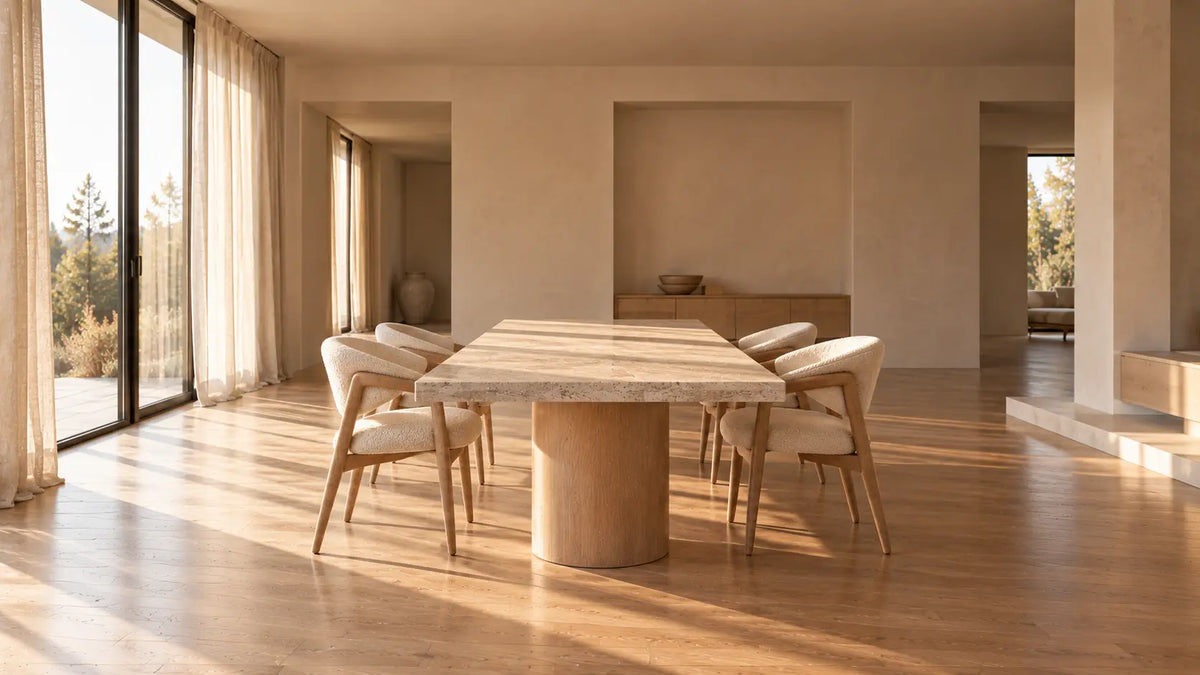
Daylight and the Dining Table: How Stone and Wood Read Through the Day
A table is chosen under one light and lived with under all of them. The window decides which one you see most.
Materials are usually selected from a sample, in a showroom or under a lamp. The dining room tells a different story. A dining table is seen at breakfast, at midday, and at dinner, and the daylight that reaches it changes in color, angle, and strength over those hours. The same top can look pale and cool at nine, warm at five, and flat on an overcast afternoon. Understanding the light in the room is part of specifying the table, not an afterthought.
Read the Orientation First
The direction the dining room faces sets the character of its light. North-facing rooms receive soft, steady, slightly cool light with little direct sun, which is kind to stone and shows it at its most neutral. South-facing rooms receive strong, warm light for much of the day, with high contrast and the possibility of glare. East-facing rooms are bright and warm in the morning and quiet by afternoon. West-facing rooms are the reverse: calm until late in the day, then low, golden light across the table at dinner. Before choosing a material, note when the room is actually used and which of these lights it will meet.
How Stone Responds
Stone shows light more honestly than any other material. A honed travertine or pale limestone turns warm and creamy under low sun and looks quieter under diffused northern light. Marble with fine veining reads clearly in soft light and can wash out in hard direct sun. A dark stone absorbs light and keeps its depth, while a polished top reflects the window itself, which can be an asset in a dim room and a glare problem in a bright one. For a room with strong, direct sun, a honed finish is the safer specification, as it diffuses the reflection instead of mirroring it.
How Wood Responds
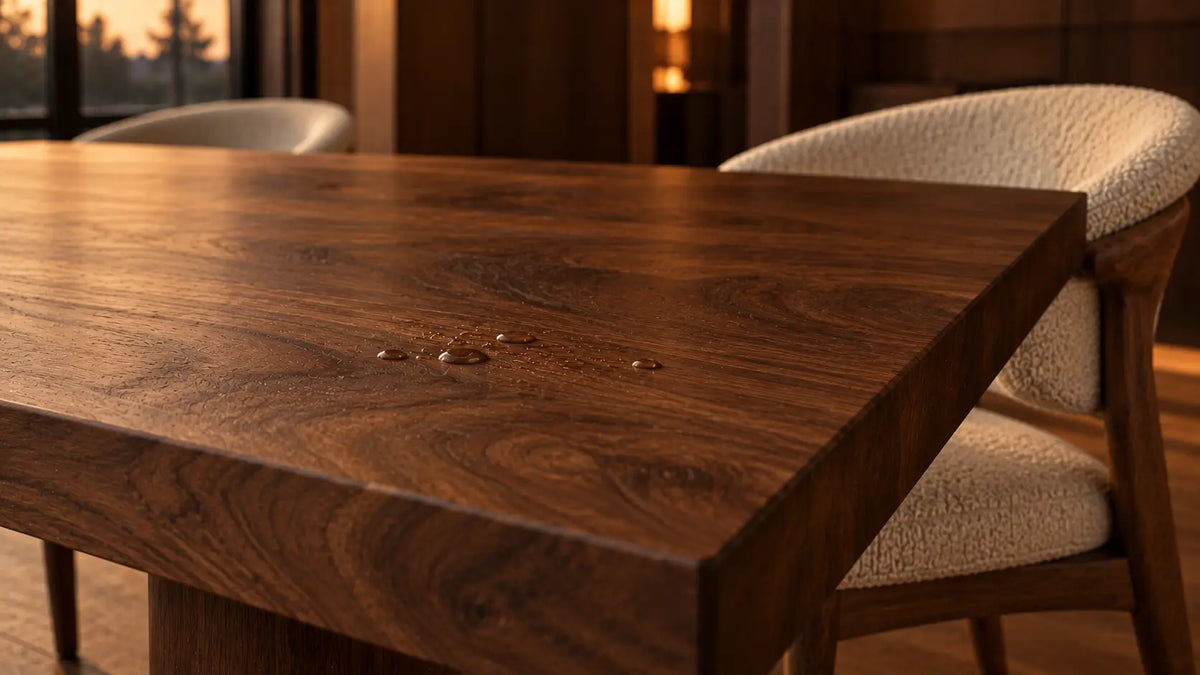
Wood also changes under light, over a longer period. Prolonged exposure to sunlight alters the color of a solid wood top: some species lighten, others deepen toward amber, and the effect is uneven if part of the table is regularly shaded by objects or by a window frame. A top that receives direct sun for hours every day will age differently from one that never does, which is worth knowing before choosing a pale or a very dark species. A finish with UV resistance and the occasional rotation of objects left on the surface limit the difference.
Placing the Table in the Light
Placement matters as much as material. The most flattering position is usually with the window to the side of the table, so light rakes across the surface and brings out the grain or the veining. Seating with diners facing a bright window leaves them in silhouette and tiring to look at, while a window directly behind the table can leave the surface in shadow. Sheer curtains or linen shades soften direct sun without making the room dark, and they are far less costly than replacing a top that has faded unevenly. Daylight and artificial light should also be considered together, as covered in the lighting specification guide, so the table does not change character at dusk.
| Room Faces | Light | Watch For |
|---|---|---|
| North | Soft, steady, cool | Dark materials can feel heavy |
| South | Strong, warm, high contrast | Glare on polished tops, uneven fading |
| East | Warm, bright morning | Flat light by afternoon |
| West | Golden, low evening sun | Direct sun at dinner, strong reflections |
- Note the room's orientation and when it is actually used before choosing a material
- Prefer a honed stone finish in rooms with strong direct sun
- Expect solid wood to change color with long sun exposure, and choose the species accordingly
- Place the table with the window to the side, not behind the diners or directly in their eyes
- Soften direct sun with sheer curtains or linen shades
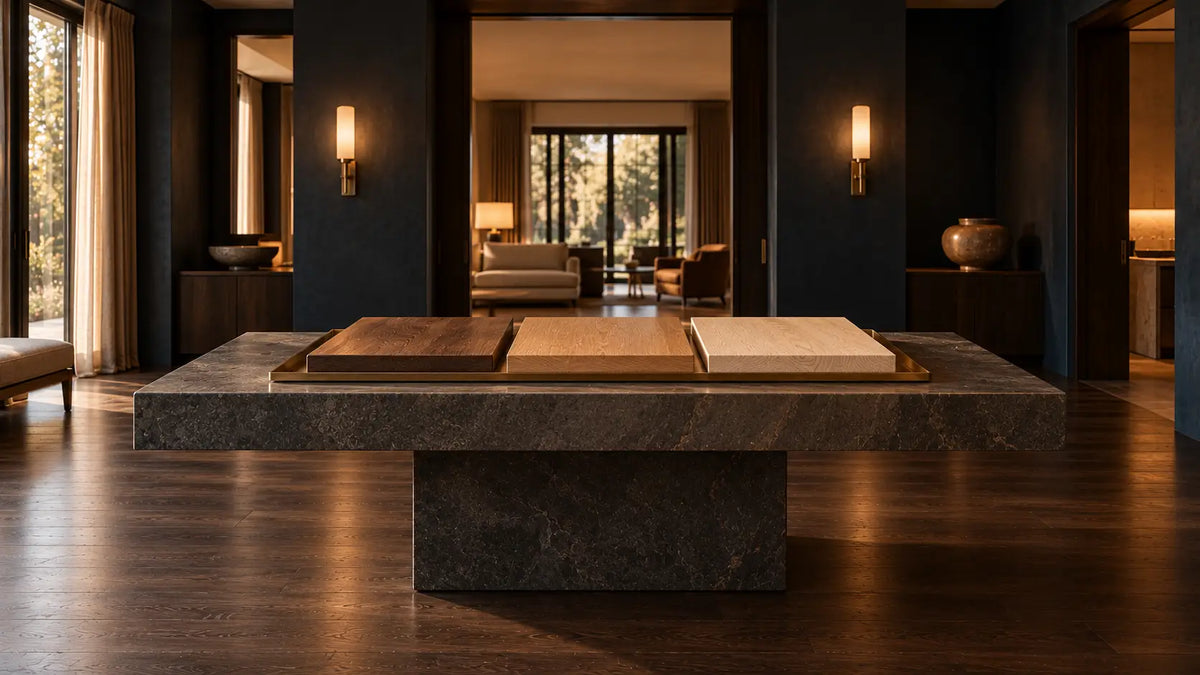
- Judge a sample at several times of day, in the room itself
The best material for a room is the one that looks right in the light the room actually has.
Our studio builds dining tables to order, in stone and in solid wood. If you're choosing a material for a specific room, our studio team is available to discuss the options directly.

Leave a comment
This site is protected by hCaptcha and the hCaptcha Privacy Policy and Terms of Service apply.