

Laine Rect — White Onyx & Stacked Blade Wave Pedestal Dining Table
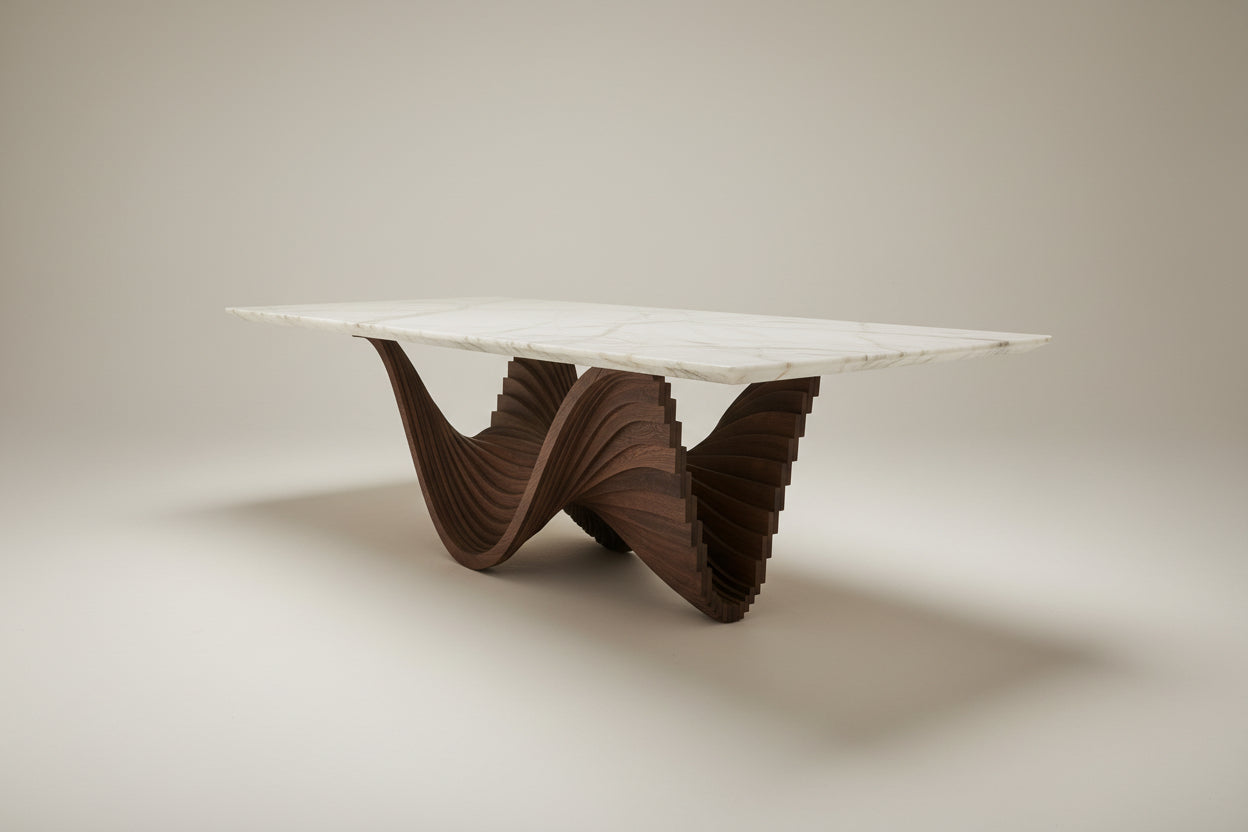
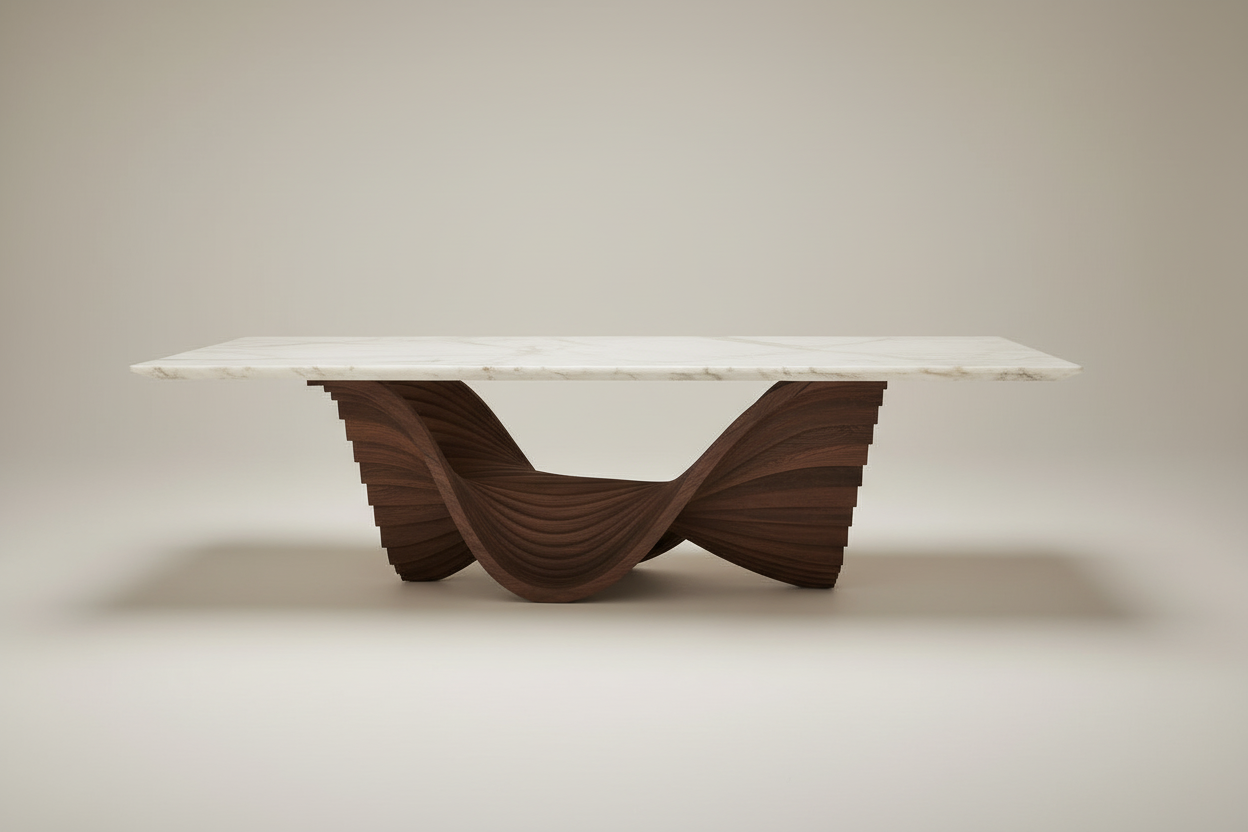
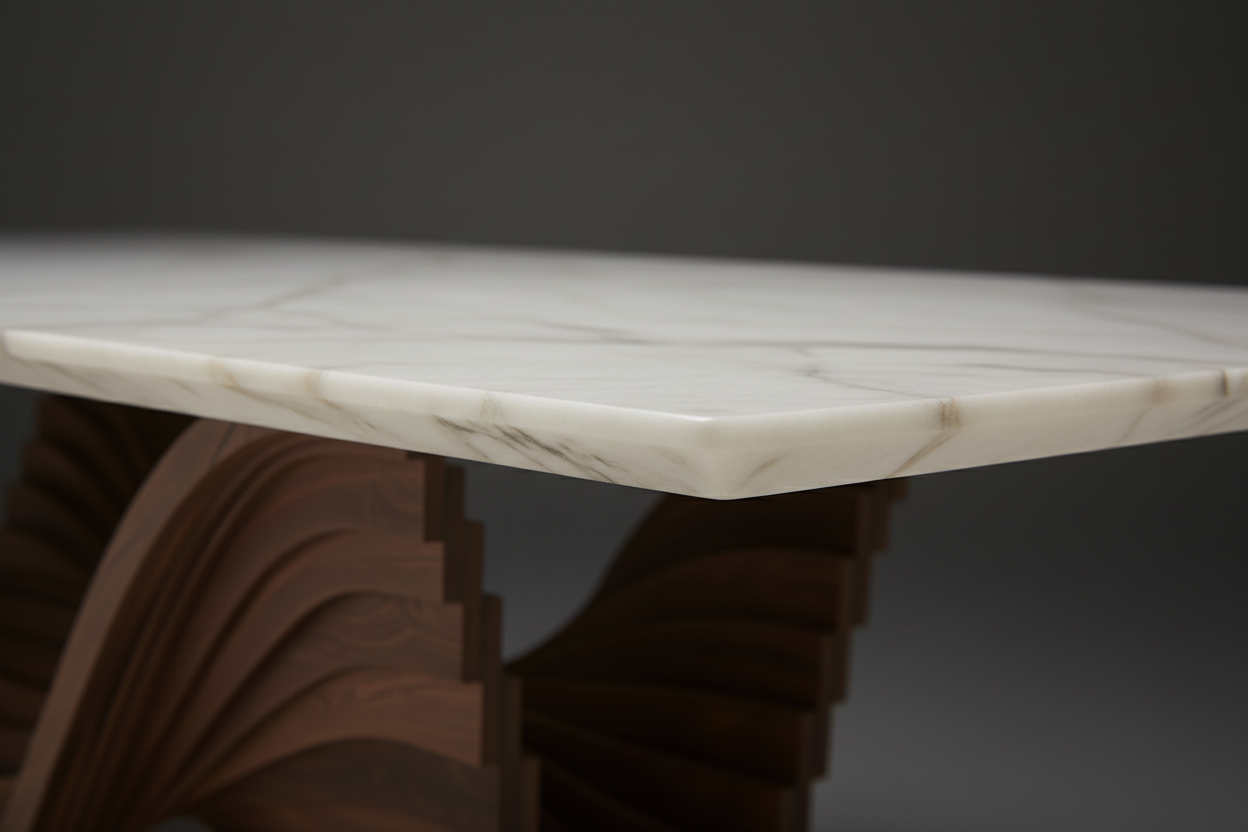
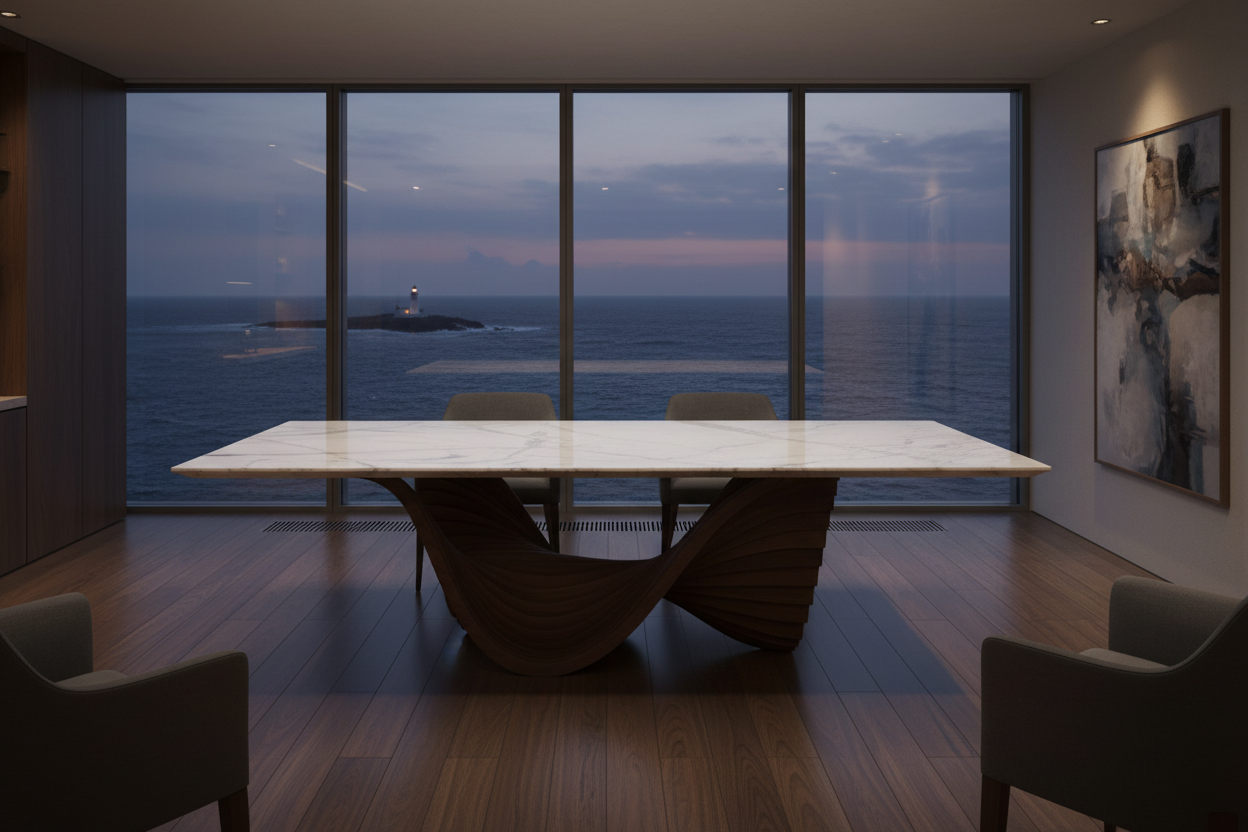
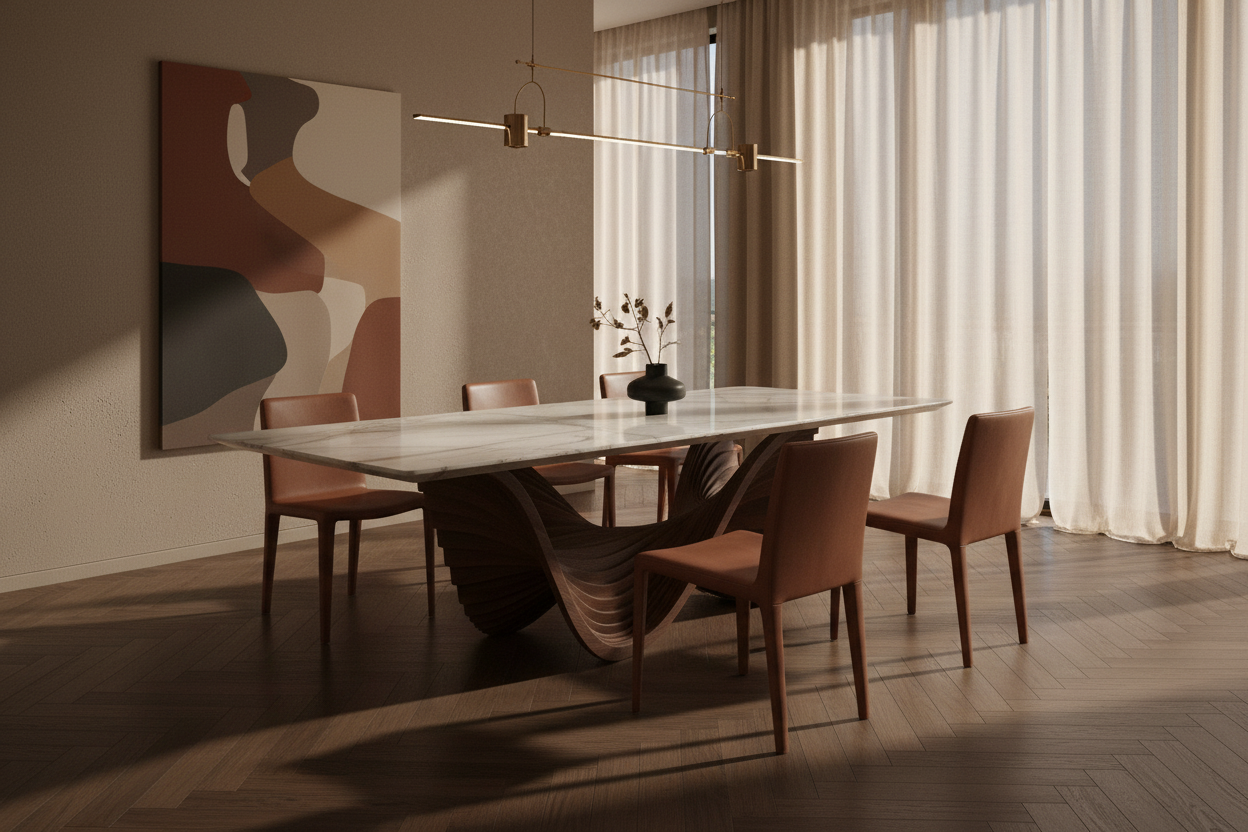
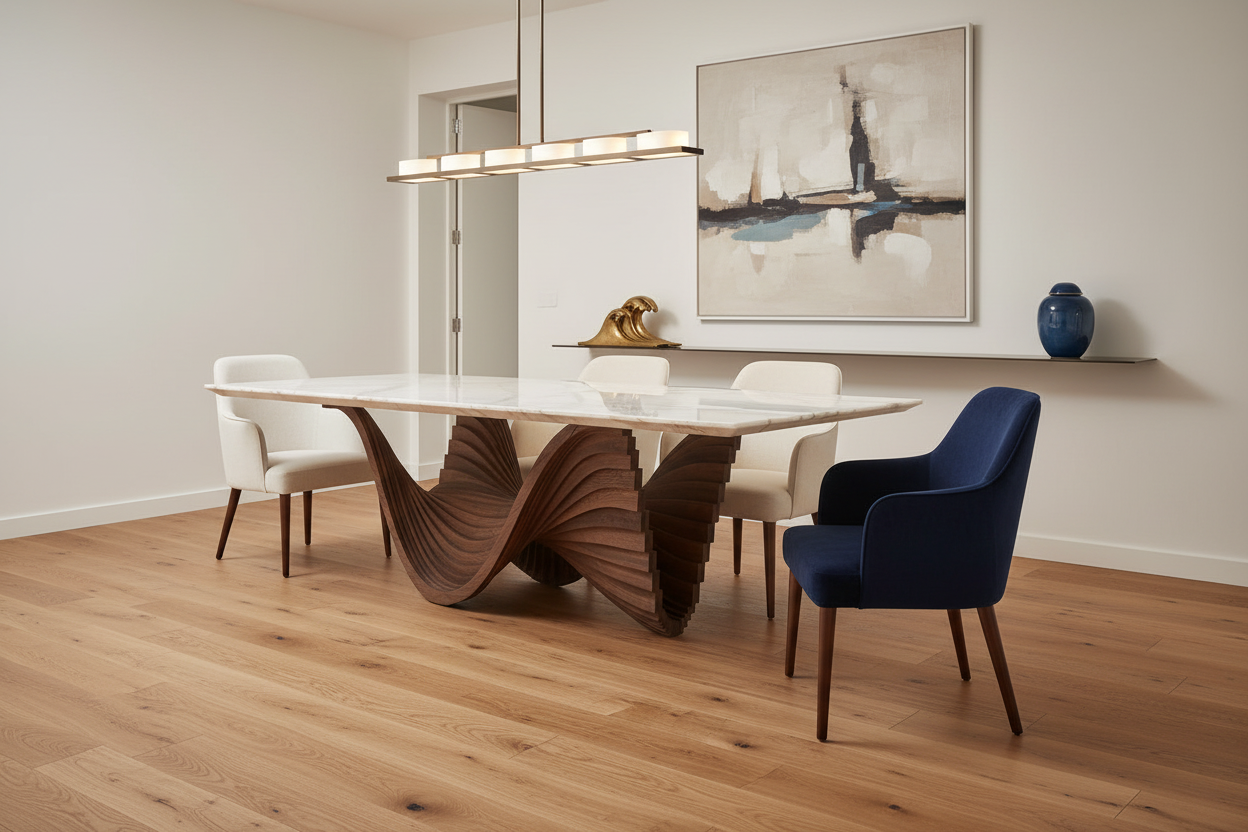
The Aalto Rect is the most formally ambitious piece in the Maison Ilmarinen collection — the one that most completely refuses the boundary between furniture and sculpture. Its plateau is a wide rectangle of White Onyx, translucent, pale green-white, its veining moving in slow arcs across a surface that in strong light becomes luminous rather than reflective. The stone is thin — chosen for its translucency as much as its colour — and its edges are rounded to a full bullnose that gives the large plateau a quality of softness unexpected in a table of this scale.
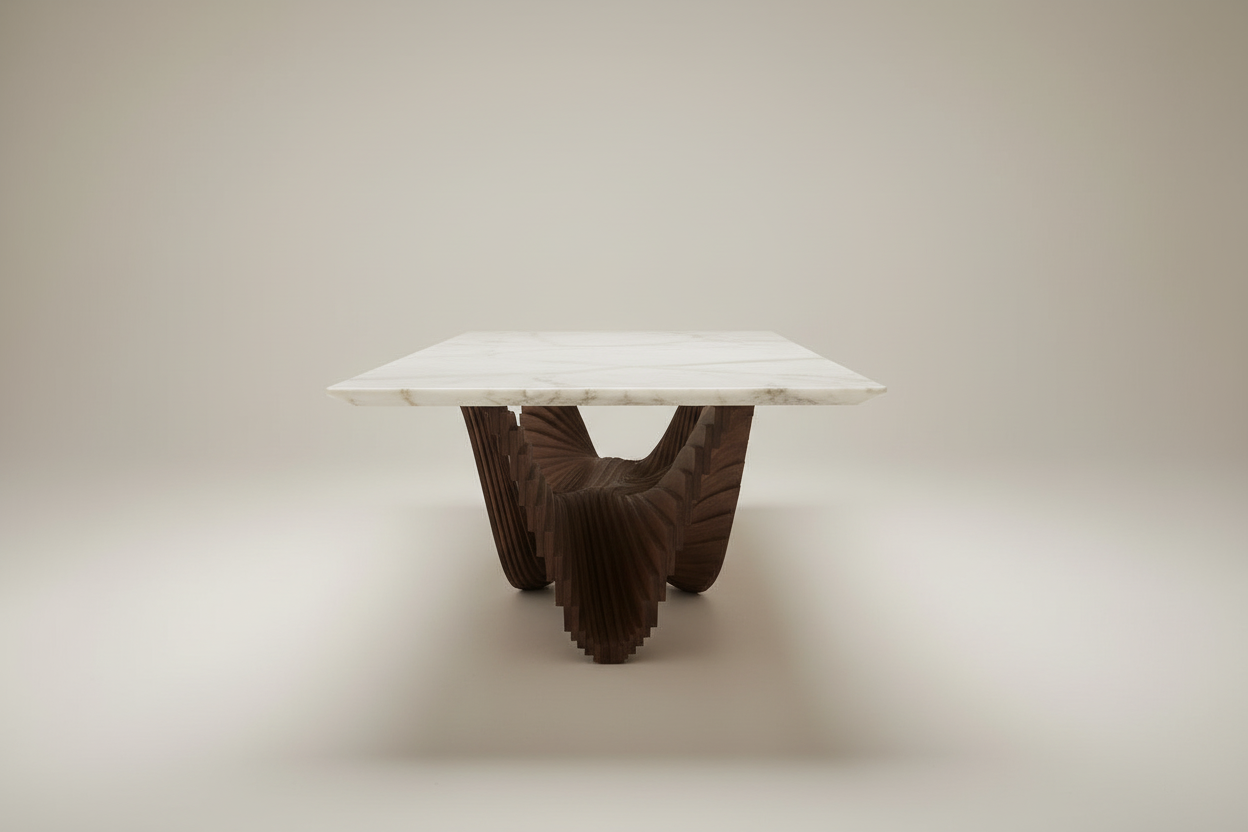
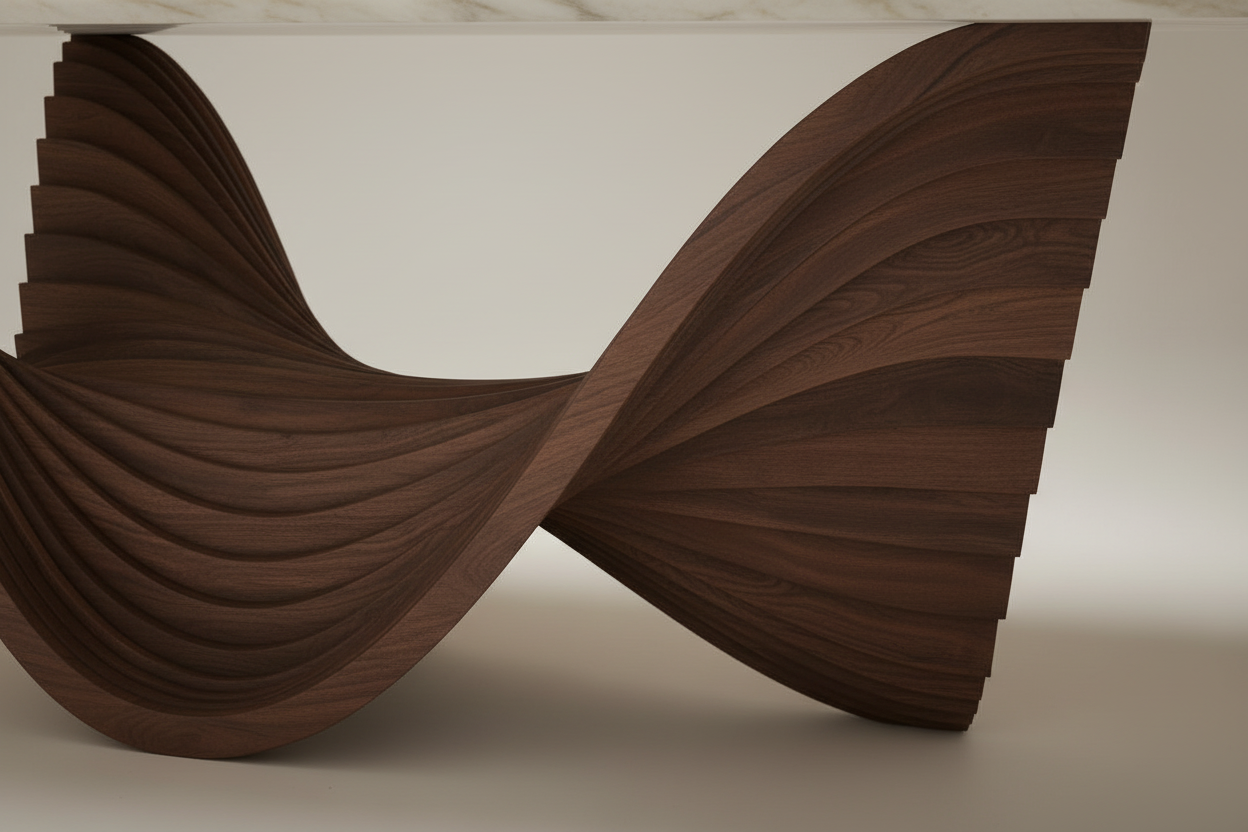
Beneath the plateau, the base is built from a technique closer to laminated timber construction than conventional furniture making. Individual blades of solid dark walnut — each one precisely cut, bevelled at its outer edge, and graduated in width — are stacked and fixed along a central axis, then the assembled stack is shaped by hand into a compound wave form: rising from the floor in two symmetrical volumes that lean outward, curve upward and inward, and converge at a crown that presses against the plateau underside from two symmetrical positions. The form that emerges evokes simultaneously a breaking wave seen in cross-section, the ribs of a ship's hull, the spread wings of a large bird, and the interior of a shell. None of these references is deliberate — they are the natural consequence of following the geometry of the form to its conclusion.
-
Materials & Construction
Plateau: White Onyx — pale green-white, translucent, honed or polished finish
Base blades: Solid dark walnut — individually cut, bevelled outer edge, graduated width
Base construction: Laminated blade stack — CNC-cut profile, hand-shaped wave form
Base finish: Hardwax oil — matte, open grain, deep walnut tone
Plateau edge: Full bullnose — generous radius, softens the large format
Connection: Concealed threaded rod at each wave crown — zero visible hardware - Dimensions :
The Aalto Rect operates in the territory where furniture meets parametric architecture — the design language pioneered by architects who use computational tools to generate organic forms from structural logic. The blade-stack wave technique is the hand-craft equivalent of that digital tradition: a construction method where the form emerges from the repetition and graduation of a single element (the blade) rather than from carving or casting.
Choose options